
The Trust Accounting and Tax System Your Firm Should Have Had From Day One.
Rule 1.15 reconciliation, CFO oversight, and tax strategy for Georgia and Alabama law firms. That's all we do.

Rule 1.15 & IOLTA
Specialists in trust accounting and IOLTA compliance.

Bar Rule Specialists
Deep working knowledge of Georgia and Alabama trust accounting and IOLTA rules.

Audit-Ready Systems
Built for monthly three-way reconciliation and records you can produce on demand.
Where Law Firms Run Into Trouble
45% of a solo attorney's time goes to non-billable admin work. For Georgia and Alabama firms, the wrong systems also create a compliance exposure most attorneys don't see until the bar opens an inquiry.
Source: Thomson Reuters, State of U.S. Small Law Firms Study.
Missing
Reconciliations
Many firms aren't completing the monthly three-way reconciliation their state bar requires.
Trust Account
Errors
A single overdraft is reported to the State Bar automatically — often before the attorney even knows it happened.
No Individual
Ledgers
Without a ledger for each client, there's no way to prove a specific client's funds were never touched.
No Financial
Visibility
Running the firm on guesswork instead of numbers means never really knowing whether it's profitable.
Misaligned
Tax Strategy
Tax prep that ignores how attorneys actually earn — draws, contingency fees, entity structure — means overpaying every year.
The Wrong
Software
QuickBooks can't run a three-way reconciliation alone; it has to sync with your practice management software. Most firms have the tools. Few have them integrated correctly.
In Georgia and Alabama, the bank reports a trust account overdraft to the State Bar automatically. No client has to complain. No money has to actually go missing. The first an attorney often hears of it is when the bar opens an inquiry.
Attorneys earning over $150,000 must pay 110% of prior-year tax to avoid the IRS underpayment penalty. Most solo attorneys aren't calculating that correctly. Source: IRS Form 1040-ES instructions.
Your Firm's Finances, All in One Place
Five core services. Curious what working together looks like? That starts with a conversation.

Trust Accounting & IOLTA Reconciliation
Monthly three-way reconciliation, Rule 1.15 compliance, and audit-ready records for Georgia and Alabama attorneys. We know what the bar expects to see — and we make sure you can produce it on demand.

CFO / Fractional CFO Services
Strategic financial oversight without the full-time cost. Cash flow planning, partner compensation structuring, and the financial guidance a growing firm needs to scale without guessing.

Accounting & Bookkeeping
Clean books, a monthly close that actually closes, and reconciliation done right. Stop guessing about where the firm stands and start managing with real numbers.
✓ Mishandled trust accounts are one of the fastest ways for an attorney to draw a bar complaint. Most are not theft. They are procedural: a reconciliation that never happened, a deposit that got commingled, a ledger that won't tie out.
✓ 45% of solo and small-firm time is spent on non-billable administrative tasks — bookkeeping, invoicing, reconciliations, intake.
Source: Thomson Reuters, State of U.S. Small Law Firms Study
✓ At a typical solo billing rate, 15 hours a week spent on admin can mean as much as $218,400 in billable work left on the table each year.
Source: LeanLaw, 2025

Tax Preparation & Tax Advisory
Tax strategy built around how law firms actually earn. Entity structure analysis, quarterly planning, and preparation that accounts for how attorney compensation really works.
Financial Reporting for Law Firms
Profit-per-partner reporting, billing analysis, and KPI dashboards that show you where your firm stands and where it is heading.
✓ 14% of completed work at solo and small firms is never billed — a realization-rate gap that often points to bookkeeping and billing infrastructure problems, not lawyering problems.
Source: RunSensible, 2025
✓ For every 8 hours worked, only 2.9 are billable. Over five hours of every working day go to administration, marketing, and other non-billable work.
Source: Clio, 2024 Legal Trends Report
30 minutes. No sales pitch. No obligation.

Trust accounting isn't a side service. It's our core focus.
We Work Exclusively With Georgia and Alabama Law Firms
Law firm accounting and specifically trust accounting compliance is the core of what we do, not a side service we offer. Every system we have built, from reconciliation workflows to tax planning, has been designed around how law firms actually operate.
That comes with real depth. We know Georgia's monthly three-way reconciliation mandate inside and out, including the attorney sign-off requirement under Rule 1.15(III). We know what audit-ready records look like when the State Bar of Georgia or the Alabama State Bar makes a request. And we know that Alabama's annual IOLTA certification window — September 1 through October 31 — missing it can lead to suspension.
The systems we build hold up under scrutiny. Clean, complete records, ready to produce within 48 hours of a bar request. Proactive oversight, not reactive bookkeeping.
In both Georgia and Alabama, trust account problems are among the most common triggers for bar discipline. The pattern is almost always procedural. Reconciliations that weren't done, funds that weren't kept separate, records that couldn't be produced on request.
Who We Work With

Solo
Practitioners
Building your first real accounting system — or cleaning up what you inherited.

Small &
Growing Firms
Outgrowing informal processes and ready for a financial team that scales with the practice. (2–15 Attorneys)

Established Practices
Looking for periodic external review, a compliance audit, or CFO-level strategic guidance.
What Working With Us Actually Looks Like
Three illustrative scenarios — a solo practice, a growing multi-attorney firm, and an established practice — drawn from common engagements. Details anonymized to protect client confidentiality.
Case Study 1: The Solo Attorney Who Inherited a Mess
Solo practitioner, criminal defense, Atlanta.
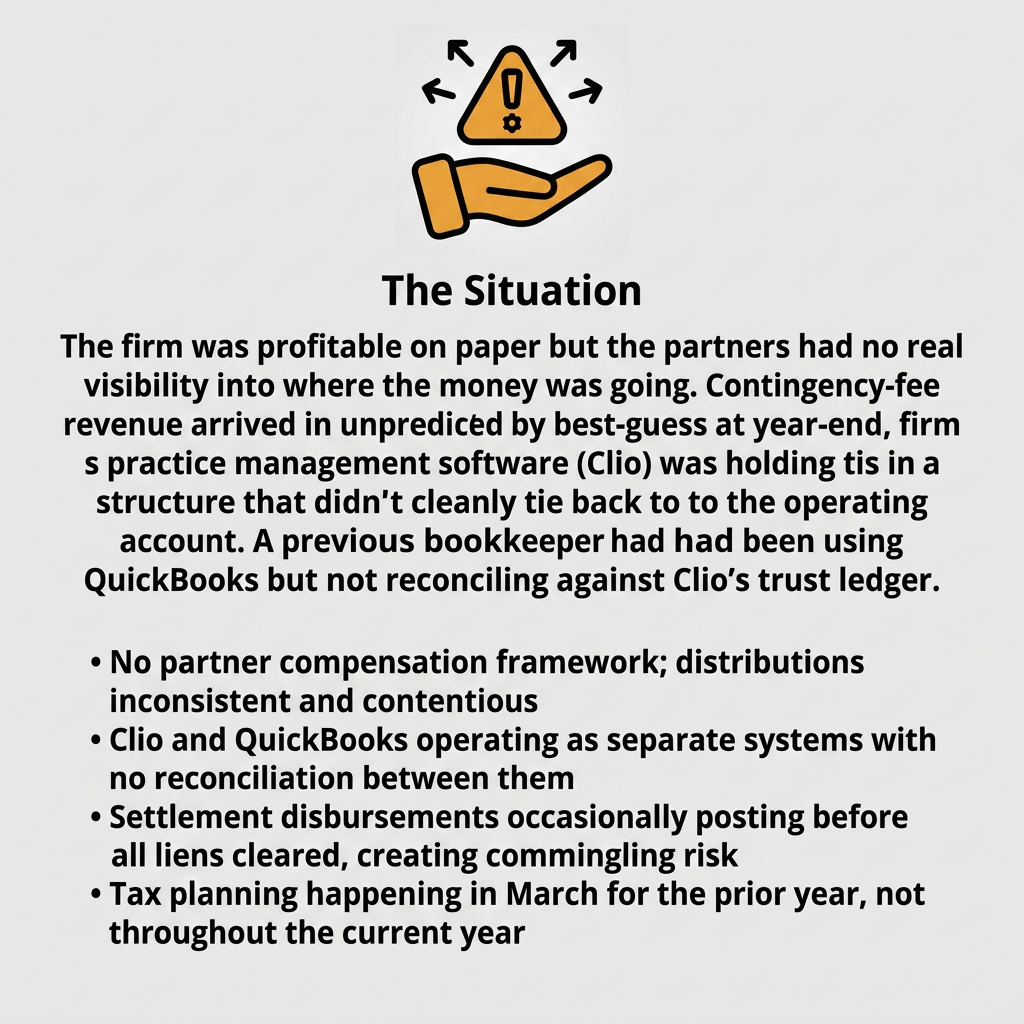
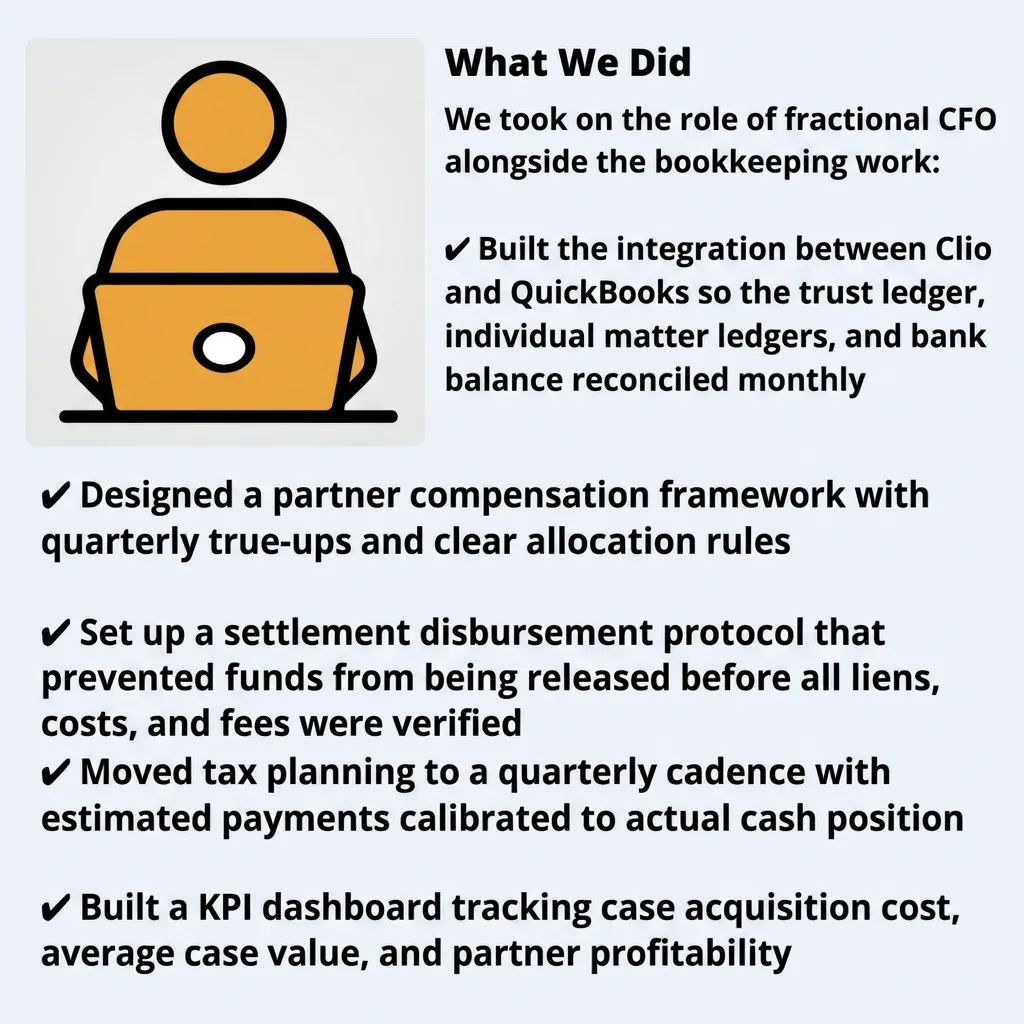
Case Study 2: The Growing Firm That Outgrew Its Systems
Multi-attorney plaintiff personal injury firm, Birmingham.
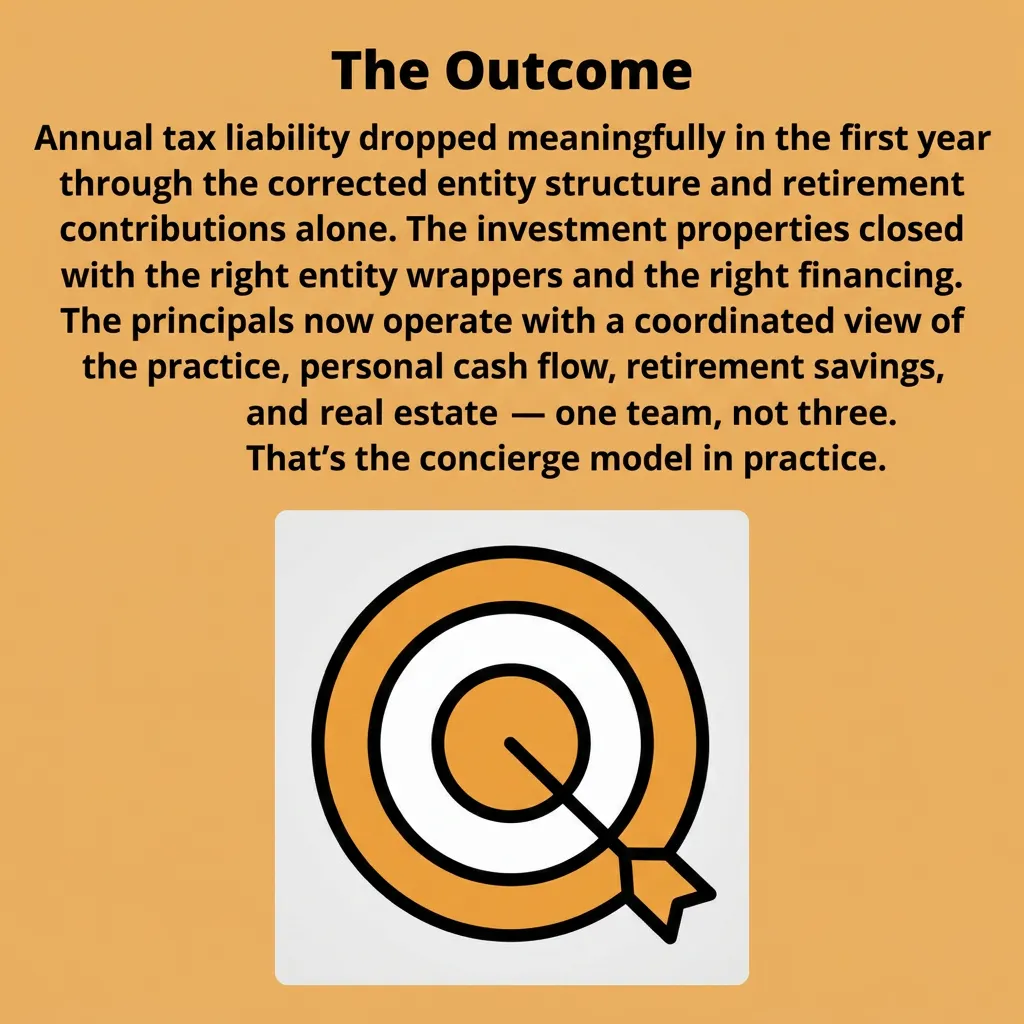
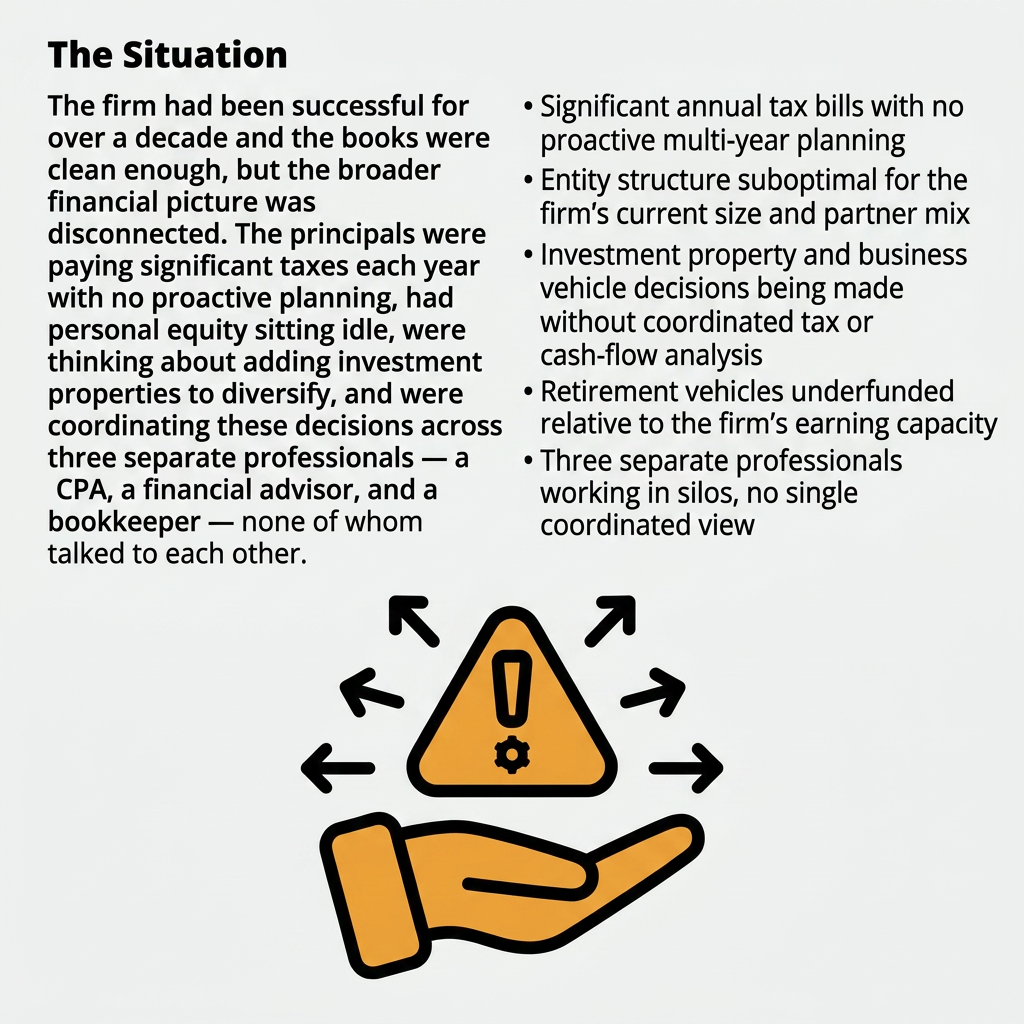
Case Study 3: The Established Practice Building Wealth Beyond the Firm
Established estate planning practice, Atlanta. Multiple attorneys, decade-plus in operation.
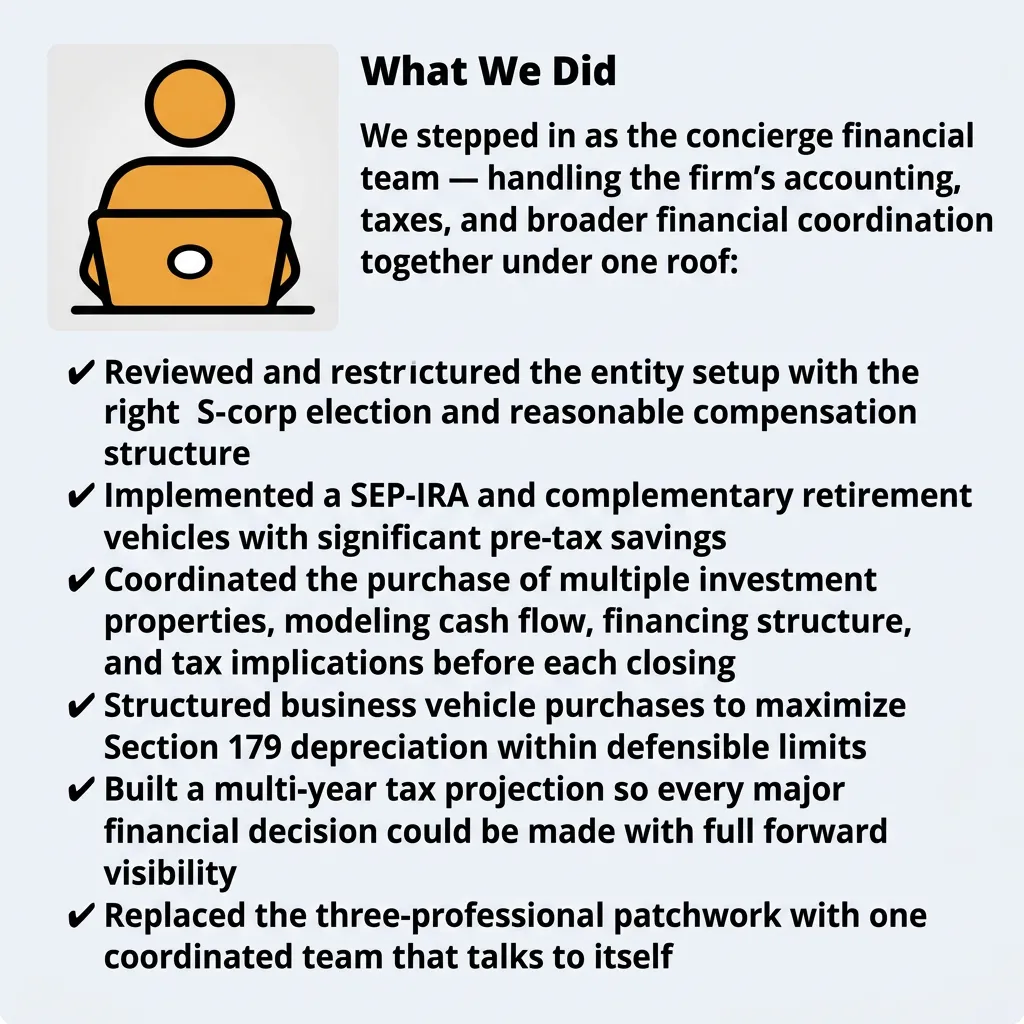
Case Study 1: The Solo Attorney Who Inherited a Mess
Solo practitioner, criminal defense, Atlanta.
Case Study 2: The Growing Firm That Outgrew Its Systems
Multi-attorney plaintiff personal injury firm, Birmingham.
Case Study 3: The Established Practice Building Wealth Beyond the Firm
Established estate planning practice, Atlanta. Multiple attorneys, decade-plus in operation.
SCROLL OVER THE DROP DOWN MENU BELOW TO EXPLORE THE OUTCOME OF EACH CASE




Why The Work Holds Up
Tax Geaks didn't start with attorneys. Our senior team came up consulting for companies with $200 million to $1 billion in revenue — building accounting infrastructure, leading ERP and practice management software implementations, and producing the kind of audit-ready financial reporting that Wall Street, private equity, and corporate boards demand. Decades of that work taught us how to design systems that hold up under scrutiny.
We chose to focus on small law firms because small law firms deserve that same quality of infrastructure — and almost never get it. Trust accounting, tax strategy, financial reporting, and the practice management software that ties it all together. One team, one stop.
Decades of combined senior-level accounting and financial reporting experience behind the firm
$200M-$1B is the revenue range of the companies our team built financial infrastructure for before focusing on law firms
$250K-$5M is the law firm revenue band where we make the biggest difference — outgrown DIY, not yet ready for an internal finance team
We are licensed to provide tax services in 48 states — with a focused current practice in Georgia and Alabama
AFFILIATIONS
Affiliate member,
American Bar Association
Member, American Institute of
Certified Public Accountants
Member, National Association of Enrolled Agents
Built for Firms at Every Stage
Tax Geaks is built for law firms generating $250,000 to $5 million in annual revenue. That's the band where firms have outgrown DIY bookkeeping and a once-a-year CPA, but aren't yet large enough to justify a full internal finance team. It's also the band where the right financial infrastructure has the biggest impact on the practice — trust accounting, tax strategy, partner compensation, and the broader financial decisions that come with growing income.
We work with larger firms too.
This is just where we make the biggest difference.
That breadth is the point. Most accounting firms specialize narrowly — either tax, or bookkeeping, or financial reporting, or systems implementation. Attorneys end up coordinating three or four professionals who don't talk to each other. We do all of it under one roof: the firm's books, the trust accounting integration, tax preparation and planning, entity structure analysis, and the financial coordination that supports broader wealth-building decisions like investment properties and major purchases.
One stop. Built for attorneys. Designed to hold up to scrutiny.
Free Resources for Attorneys

Two compliance resources written specifically for law firm principals in Georgia and Alabama. No obligation, no follow-up call — just the documents.
Resource 1
Resource 2
White Paper: Trust Accounting for Law Firms Tax Geaks, 2026 — 10 pages. A practical guide to what trust accounting actually requires, how firms get into trouble, how to evaluate your current setup, and what a compliant, scalable system looks like in practice.
Research Memo: Trust Accounting Rules — National, Georgia & Alabama Tax Geaks, March 2026 — 26 pages. A detailed legal compliance reference covering ABA Model Rule 1.15, Georgia Rules 1.15(I)–1.15(III), and Alabama Rule 1.15, with a side-by-side state comparison, enforcement risk analysis, and operational best practices.
Prepared for attorney use.
Resource #1
White Paper: Trust Accounting for Law Firms Tax Geaks, 2026 — 10 pages. A practical guide to what trust accounting actually requires, how firms get into trouble, how to evaluate your current setup, and what a compliant, scalable system looks like in practice.
Resource #2
Research Memo: Trust Accounting Rules — National, Georgia & Alabama Tax Geaks, March 2026 — 26 pages. A detailed legal compliance reference covering ABA Model Rule 1.15, Georgia Rules 1.15(I)–1.15(III), and Alabama Rule 1.15, with a side-by-side state comparison, enforcement risk analysis, and operational best practices.
Prepared for attorney use.
Access Both Resources
FAQs
How is this different from my current CPA?
Most CPAs are generalists who treat law firms like any other small business. We work exclusively with attorneys in Georgia and Alabama, with senior team experience that comes from building financial infrastructure for $200M-to-$1B companies. That means we know Rule 1.15(III), the monthly three-way reconciliation requirement, the Alabama IOLTA certification window, and how attorney compensation actually works. Our systems are built for law firms from the ground up.
Can you work with my current CPA or bookkeeper?
Yes. Many firms keep their existing CPA for personal returns and bring us in for the firm-side trust accounting, bookkeeping, and tax strategy. We'll work directly with your CPA when needed. If you'd prefer we handle everything end-to-end as a one-stop shop, we can do that too.
What if my books are a mess right now?
That's actually a common starting point — and it's not a problem. The first phase of most engagements is a cleanup and catch-up. We'll get your books current, reconcile your IOLTA properly, and build the system going forward.
Do you handle multi-state firms?
Our current focus is Georgia and Alabama law firms, but our team is licensed to provide tax services across 48 states. If your firm operates in additional states, we'll discuss the scope and whether we're the right fit for trust accounting and bar compliance work in those jurisdictions.
Is there a revenue range you work with?
Our sweet spot is law firms generating $250,000 to $5 million in annual revenue — the band where firms have outgrown DIY bookkeeping and a once-a-year CPA, but aren't yet large enough for a full internal finance team. We work with larger firms too; this is just where the engagement model produces the biggest impact. If you're below that range and want to talk anyway, get in touch and we'll be straight with you about fit.
How quickly can you produce records if the bar requests them?
Within 48 hours. The reconciliation workflow we maintain for every client is designed to produce audit-ready records on demand — bank statements, three-way reconciliations, individual client ledgers, and the attorney sign-off documentation required under Rule 1.15(III).
What does an engagement typically cost?
Pricing depends on firm size, number of trust accounts, and the scope of services (compliance-only, full bookkeeping, fractional CFO). Most engagements fall into a predictable monthly range, and we'll quote specifically after a compliance review. There are no hourly surprises.
What software do you use? Do I have to switch?
No migration. We work within the tools your firm already uses. QuickBooks handles the firm's general ledger and books. Your practice management software — Clio, MyCase, PracticePanther, or whatever you already have in place — maintains the individual client ledgers per matter. We tie the two together to produce the monthly three-way reconciliation the bar requires. No new learning curve for you or your staff.
Can you help with things beyond the law firm itself?
Yes. Many of our attorney clients work with us as a concierge financial team — coordinating practice accounting and tax with broader financial decisions like investment properties, vehicle purchases, retirement planning, and entity structure. One team, one coordinated view. That's the one-stop-shop model we built the firm around.
What happens on the compliance review call?
We'll review the firm's current setup — how trust accounts are reconciled, how tax planning is being handled, where the risk is. The call lasts about 30 minutes. There's no pitch deck and no obligation. If we're the right fit, we'll talk about next steps. If we're not, we'll tell you that too.